
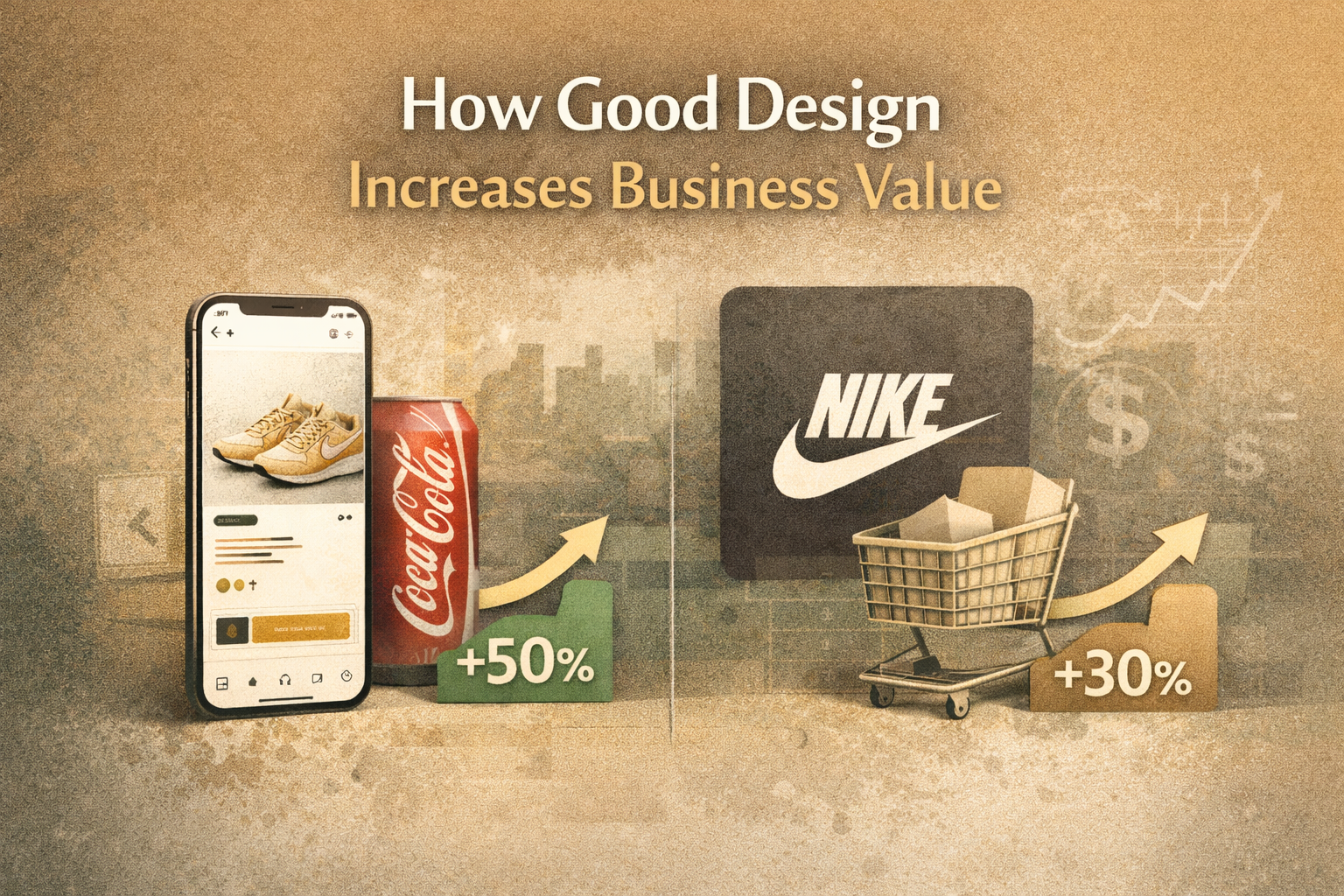
How Good Design Increases Business Value
Introduction
Design is often misunderstood as decoration.
In reality, design is a strategic business tool. It shapes perception, builds trust, influences purchasing decisions, and strengthens market positioning.
Good design does not just make a brand look better — it makes a brand perform better.
First Impressions Shape Perception
People form opinions within seconds.
Before reading a headline or understanding a product, customers evaluate visual cues:
-
Logo quality
-
Color palette
-
Layout structure
-
Typography
-
Overall visual coherence
A professional and well-structured visual identity communicates credibility immediately. Poor design creates doubt.
In competitive markets, perception matters.
Design Builds Trust and Credibility
Consumers are more likely to engage with brands that appear professional and consistent.
Clean layouts, structured branding systems, and thoughtful presentation signal reliability. When a business invests in its visual identity, it signals seriousness and long-term commitment.
Trust influences decision-making — and design directly supports that trust.
Strong Branding Increases Perceived Value
Design influences how much people are willing to pay.
Luxury brands often rely on minimalism, refined typography, and controlled color palettes to position themselves as premium. The product may be similar to competitors, but the perceived value is higher.
Brands like Apple and Tesla demonstrate how strong visual identity contributes to premium positioning and customer loyalty.
Design elevates perception — and perception influences price.
Design Impacts Marketing Performance
Well-designed visuals improve:
-
Social media engagement
-
Advertisement performance
-
Website user experience
-
Conversion rates
-
Brand recall
Clear hierarchy, readable typography, and strong visual balance make communication more effective.
Good design supports marketing strategy. It does not replace it — it strengthens it.
Consistency Creates Long-Term Equity
A structured visual identity builds recognition over time.
When customers repeatedly encounter the same visual language — colors, typography, layout — familiarity grows. Familiarity builds comfort. Comfort builds loyalty.
That loyalty becomes brand equity.
Design is not a short-term expense. It is a long-term investment.
Conclusion
Good design increases business value by strengthening perception, building trust, improving communication, and supporting strategic positioning.
It influences how customers feel about a brand — and how much they are willing to invest in it.
When design is intentional and structured, it becomes a competitive advantage.
Design is not decoration.
It is business strategy.