
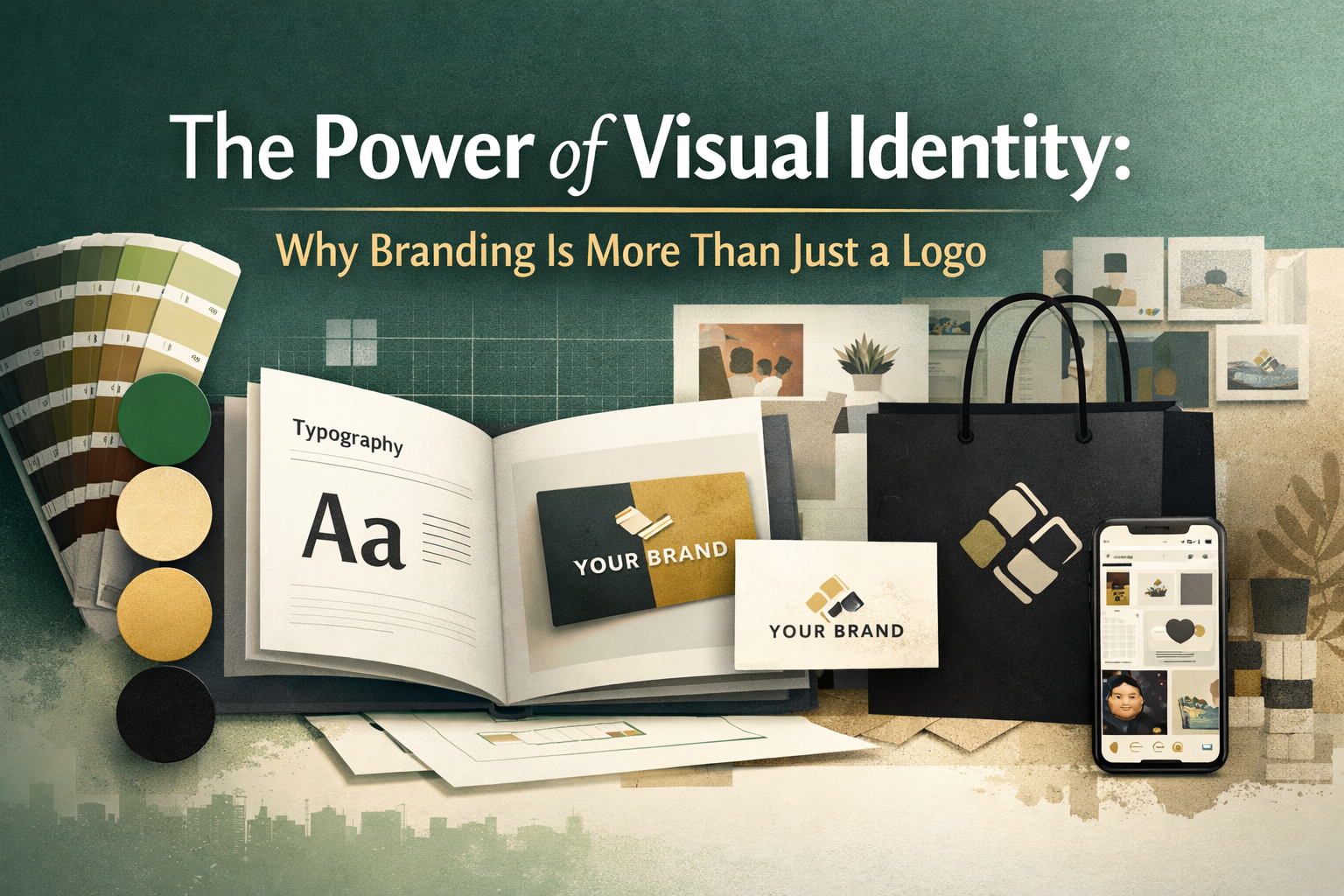
The Power of Visual Identity: Why Branding Is More Than Just a Logo
Introduction
Many businesses believe that branding begins and ends with a logo.
In reality, a logo is only one element within a much larger system.
A strong visual identity is the strategic combination of logo, typography, color, layout, imagery, and consistency. It shapes how a brand is perceived, how it communicates, and how it builds trust.
Branding is not decoration — it is positioning.
A Logo Is a Symbol — Not the Entire Brand
A logo represents a brand, but it does not define it on its own.
Without a structured visual system behind it, even the most well-designed logo can feel disconnected or inconsistent across different platforms.
A true visual identity ensures that:
-
The brand looks cohesive everywhere
-
The message feels aligned
-
The experience is recognizable
The Role of Color in Brand Perception
Color plays a psychological role in branding. It communicates emotion before a single word is read.
-
Black conveys authority and sophistication
-
Green suggests growth, sustainability, and balance
-
Gold reflects luxury and exclusivity
-
Beige communicates softness and elegance
Strategic color selection strengthens positioning and influences how audiences emotionally respond to a brand.
Typography as Brand Personality
Typography is often underestimated, yet it strongly shapes perception.
A serif typeface can communicate heritage and tradition.
A clean sans-serif suggests modernity and clarity.
A bold display font creates confidence and presence.
When typography is chosen intentionally and applied consistently, it becomes part of the brand’s voice.
Consistency Builds Trust
A brand that looks different on every platform creates confusion.
Consistency across:
-
Social media
-
Packaging
-
Websites
-
Print materials
-
Advertising
builds credibility and professionalism.
This is why brand guidelines are essential. They protect the integrity of the identity and ensure the brand remains strong over time.
Branding Creates Recognition and Value
Some of the world’s most recognizable companies — such as Apple, Nike, and Coca-Cola — are not powerful because of their logos alone.
They are powerful because their entire visual system is consistent, intentional, and strategically built.
Strong branding increases perceived value, builds loyalty, and differentiates a business from competitors.
Conclusion
A logo is the starting point.
A visual identity is the foundation.
Branding goes beyond aesthetics — it defines how a business communicates, connects, and grows.
Investing in a structured visual identity is not an expense. It is a long-term strategic decision that strengthens recognition, builds trust, and elevates a brand’s position in the market.
Great content! Keep up the good work!